
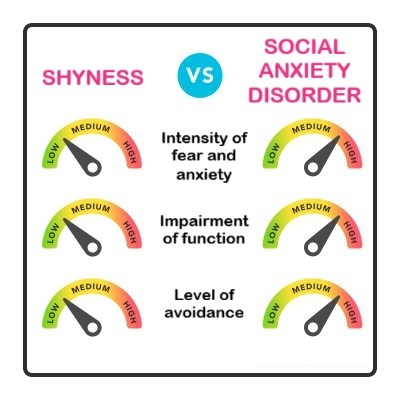
 The terms social anxiety, shyness and social anxiety disorder (SAD) are sometimes confused.
The main difference is that shyness, or milder forms of social anxiety may be considered a normal, temporary feeling of nervousness in social situations. SAD is a diagnosable condition and a more persistent fear that interferes with daily life in ways that cause significant distress or impairment. Most people experience some social anxiety, but the disorder is a clinical diagnosis for when the symptoms becomes debilitating and impairs a person’s ability to function in aspects of their social, professional, or personal life.
Distinguishing factors include:
-The intensity of the fear and anxiety felt
-The impairment of everyday functioning that it may cause in a person’s life
-The level of avoidance and safety behaviours
Shyness and more general “social anxieties” : People may be socially quiet or a little uncomfortable, but after being in a situation for a while they generally become more at ease. Their anxiety is generally tolerable and understandable in the context. Some consider shyness a personality trait.
Social Anxiety Disorder: A more extreme fear of particular social/public situations. Sufferers will often fear being embarrassed or worry about being negatively evaluated by others. Anticipatory anxiety and avoidance are common, and individuals may endure social situations with a high level of discomfort. The anxiety may persist, or even intensify, throughout the situation. The scope of the anxiety may be focused on specific settings or generalised to almost any social/public encounter.
Please see our pages on:
How do I know if I have Social Anxiety Disorder?
Difference between social anxiety and performance anxiety
Please also see these pages :
www.socialanxietyinstitute.org – Shyness or social anxiety disorder
www.verywellmind.com -Difference between shyness and social anxiety disorder

